
Radiofrequency Microneedling in Calgary
Advanced skin tightening and collagen remodeling combining mechanical collagen induction with controlled dermal heating. Fine insulated microneedles deliver radiofrequency energy directly into the dermis for deeper tightening, scar remodeling, and pore refinement with limited downtime.
Best for: Mild to moderate skin laxity, acne scars, enlarged pores, early jowling, crepey skin, neck and decollete texture
Treatment type: In-clinic medical procedure (45-75 minutes)
Performed by: Medical skin professionals under the direction of Marie Bertrand, Microbiologist & Joseph MacDonald, MD CFPC
Quick Overview
- What it does: Delivers radiofrequency energy through insulated microneedles directly into the dermis for collagen remodeling, skin tightening, scar improvement, and pore refinement
- Ideal candidates: Patients with mild to moderate skin laxity, acne scarring, enlarged pores, early jowling, crepey neck or decollete skin
- Typical sessions: 3-4 treatments, spaced 4-6 weeks apart
- Downtime: 2-5 days of redness and mild swelling; most resume normal activities within 48 hours
- Safety profile: Well-established when performed by trained professionals with proper parameter customization
- When results appear: Initial tightening within 1-2 weeks; progressive improvement over 3-6 months
- Starting from: $400 per session

What RF Microneedling Treats
Many patients notice early signs of skin laxity along the jawline, neck, or around the eyes that topical products and surface-level treatments cannot meaningfully address. When skin has lost structural integrity beneath the surface, deeper collagen remodeling is required.
RF microneedling is commonly recommended when:
- Mild to moderate skin laxity is present along the jawline or neck
- Acne scars remain visible despite other treatments
- Enlarged pores are texturally prominent
- Crepey or thinning skin appears on the neck or decollete
- Early jowling or loss of facial definition is developing
- Deeper collagen stimulation is needed beyond what standard microneedling provides
- Skin texture appears rough or uneven despite consistent skincare
RF microneedling delivers controlled thermal energy directly into the dermis, triggering a deeper wound-healing response than mechanical microneedling alone.
This treatment may not be appropriate for patients with active skin infections, inflammatory acne flares, or certain medical skin conditions. A consultation is essential to determine suitability.
How Radiofrequency Microneedling Works
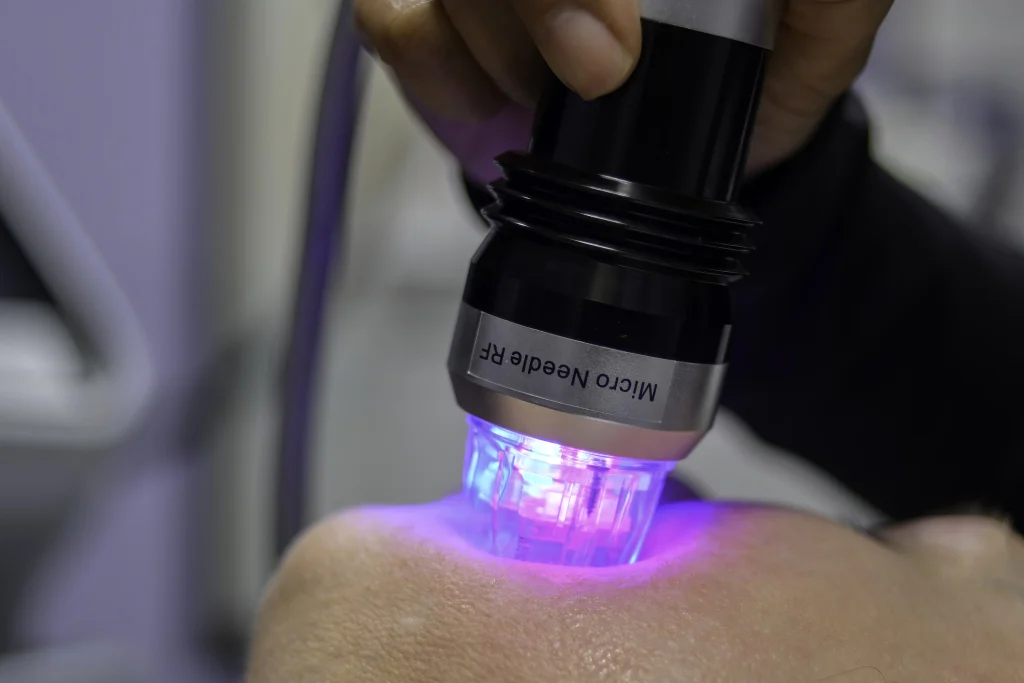
How RF Microneedling Works
During treatment, a handpiece fitted with fine insulated microneedles penetrates the skin to a precisely controlled depth. Once at the target depth, radiofrequency energy is delivered directly into the dermal tissue. The insulated needle design ensures energy is deposited deep in the dermis while protecting the epidermis from thermal damage.
This controlled thermal injury triggers an intensive wound-healing cascade, stimulating new collagen and elastin production at a deeper level than standard microneedling.
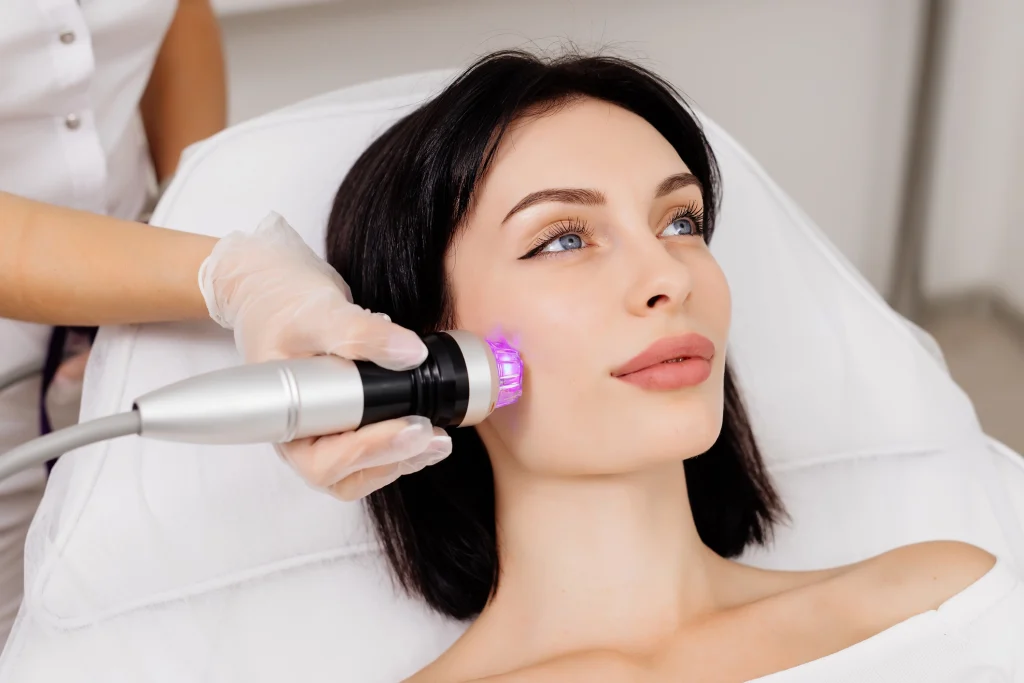
Why RF Energy Changes the Outcome
Standard microneedling relies on mechanical micro-injuries to stimulate collagen. RF microneedling adds controlled heat energy, producing more significant dermal tightening and remodeling. This is particularly effective for skin laxity, deeper scarring, and structural concerns that mechanical stimulation alone cannot adequately address.
At SkinScience, treatment depth, RF energy levels, and needle configuration are customized for each patient.

The SkinScience Protocol
Every RF microneedling plan begins with comprehensive skin analysis, including VISIA Complexion Analysis imaging. Treatment parameters are never set to generic defaults. Depth, energy level, and treatment pattern are customized based on individual skin biology, concern severity, and long-term goals.
RF Microneedling vs Other Treatments
RF Microneedling vs Standard Microneedling
Standard microneedling stimulates collagen through mechanical micro-injuries. RF microneedling adds controlled thermal energy for deeper dermal remodeling. Patients seeking surface texture improvement may start with standard microneedling; those with laxity or deeper scarring benefit more from RF.
RF Microneedling vs Laser Resurfacing
Laser resurfacing ablates surface skin layers for dramatic renewal but carries higher risk of pigmentation changes and longer downtime. RF microneedling delivers energy beneath the surface without ablating the epidermis, offering meaningful tightening with less risk across a broader range of skin tones.
RF Microneedling vs Surgical Facelift
A surgical facelift addresses significant laxity through tissue repositioning. RF microneedling is a non-surgical alternative for mild to moderate laxity. It cannot replicate surgical results but offers progressive tightening without incisions, general anesthesia, or extended recovery.
RF Microneedling vs Ultherapy
Ultherapy uses focused ultrasound for deep tissue lifting. RF microneedling targets the mid-dermis with combined mechanical and thermal stimulation. Both address laxity through different mechanisms. Your consultation determines which approach best fits your anatomy and goals.
RF Microneedling vs Thread Lifts
Thread lifts provide immediate mechanical lifting through dissolvable sutures. RF microneedling stimulates natural collagen remodeling for gradual, progressive improvement without the risks associated with thread migration or asymmetry.
Results, Timeline & Expectations
RF microneedling produces gradual improvement as collagen remodels over time.
- Short term (1-2 weeks): Initial skin tightening and improved texture as healing begins
- Mid term (1-3 months): Progressive tightening, pore refinement, and scar improvement
- Long term (3-6 months): Maximum collagen remodeling with continued improvement in laxity and firmness
- Maintenance: Annual sessions may be recommended to sustain results
Radiofrequency microneedling does not:
- Replicate surgical lifting for advanced tissue descent
- Remove the epidermis
- Treat severe skin laxity requiring surgical intervention
The strength of this treatment is cumulative, progressive improvement that compounds over time with each session.
Safety & Suitability
RF microneedling is well tolerated when performed by qualified medical professionals with proper parameter customization.
You may not be a candidate if you:
- Have active skin infections or inflammatory acne
- Have a pacemaker or implanted electronic device
- Are prone to keloid scarring
- Are currently using isotretinoin
- Are pregnant
Common temporary side effects:
- Redness and mild swelling (2-5 days)
- Mild bruising in some patients
- Skin sensitivity and warmth
- Slight dryness or flaking as skin renews
Our Clinical Approach
At SkinScience, RF microneedling is integrated into a comprehensive skin health strategy developed by founder Marie Bertrand, a trained microbiologist with research experience at the National Institutes of Health. With over 17 years of clinical experience, our approach is guided by:
- Thorough skin analysis including VISIA imaging
- Conservative, evidence-based treatment planning
- Customized depth and energy parameters
- Integration with complementary treatments when appropriate
- Long-term skin health and collagen preservation
We do not recommend treatments you do not need.
Frequently Asked Questions
Is RF microneedling painful?
Topical numbing cream is applied before treatment. Most patients describe a warm prickling sensation. Discomfort is well managed with proper anesthesia and energy settings.
How many sessions do I need?
Most patients benefit from 3-4 sessions spaced 4-6 weeks apart, depending on concern severity and treatment goals.
What is the downtime?
Expect 2-5 days of redness and mild swelling. Most patients resume normal activities within 48 hours.
Is it safe for darker skin tones?
Yes. Because insulated needles deliver energy beneath the epidermis, RF microneedling carries lower risk of pigmentation changes compared to laser treatments.
Can it treat acne scars?
Yes. The combination of mechanical micro-injury and thermal remodeling makes RF microneedling particularly effective for rolling and boxcar acne scars.
How does it compare to standard microneedling?
RF adds controlled heat energy for deeper tightening and scar remodeling. Standard microneedling with exosomes is often preferred for surface texture. Your consultation determines the best approach.
When will I see results?
Initial tightening appears within 1-2 weeks. Most significant improvements develop over 3-6 months as collagen remodeling progresses.
Is RF Microneedling Right for You?
RF microneedling is ideal for patients seeking meaningful skin tightening and structural improvement without surgery. It is especially effective for mild to moderate laxity, acne scarring, or textural concerns that surface-level treatments have not adequately addressed.
During your consultation, we will:
- Analyze your skin using VISIA Complexion Analysis imaging
- Assess laxity, scarring, and structural concerns
- Recommend a customized RF microneedling protocol
- Discuss how RF integrates with your overall skin strategy
Your skin tells your story. Let us help you write the next chapter with science, not guesswork.
